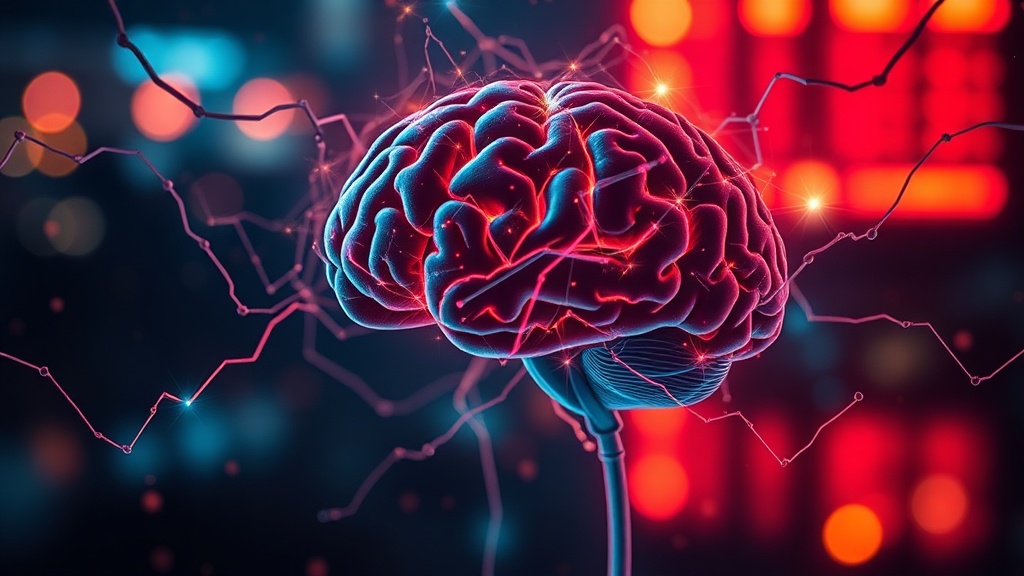
Why Your Brain Prefers Predictable Stress Over Uncertain Change

Approximately 70% of adults report experiencing high levels of stress, yet many find themselves stuck in cycles of behavior that actually increase their mental load. This happens because the human brain isn't built for happiness; it's built for survival. When we face a choice between a known negative outcome and an unknown potential outcome, the brain often defaults to the known. This biological bias explains why people stay in high-stress jobs or draining social loops—the predictability of the discomfort feels safer than the risk of the unknown.
This phenomenon isn't a character flaw or a lack of willpower. It is a survival mechanism. When we understand how the amygdala processes uncertainty, we can start to build better mental frameworks. Instead of waiting for a moment of sudden clarity, we can work with our biology to create more stable emotional states.
Why does uncertainty feel so uncomfortable?
To the brain, uncertainty equals danger. In the wild, a rustle in the grass could be a predator or just the wind. If the brain assumes the worst, it survives. In modern life, this translates to a constant state of hyper-vigilance. When we don't know what our schedule looks like or when a deadline will drop, our nervous system stays in a state of high alert. This isn't just a feeling; it's a physiological response involving the endocrine system and the autonomic nervous system.
Research from the American Psychological Association suggests that the lack of predictability is a primary driver of chronic anxiety. When we can't predict the outcome of our actions, our sense of agency—the belief that we can influence our lives—shrinks. This shrinkage is a precursor to learned helplessness. We aren't just stressed because things are hard; we're stressed because we feel we have no control over when the hardness ends.
The Biology of the Unknown
When you face an ambiguous situation, your brain's prefrontal cortex (the logical part) and your amygdala (the emotional part) enter a tug-of-war. The amygdala wants to signal a threat, while the prefrontal cortex tries to rationalize the situation. If the ambiguity persists, the prefrontal cortex eventually tires out, leaving you in a state of cognitive fatigue. This is why making even small decisions feels impossible after a long day of dealing with unpredictable stimuli.
Can I train my brain to tolerate ambiguity?
You can't delete the instinct to fear the unknown, but you can build a higher threshold for it. In clinical settings, this is often approached through exposure. The goal isn't to seek out chaos, but to practice being okay with the "maybe." This involves introducing small, controlled doses of uncertainty into your daily routine.
Think of it as a muscle. If you only ever do what is certain, your tolerance for change remains brittle. By intentionally stepping into low-stakes ambiguity, you teach your nervous system that "unknown" does not always equal "catastrophe." Some effective ways to practice this include:
- The Micro-Decision Method: Choosing a new restaurant or a different route to work without looking up reviews first.
- The Information Fast: Intentionally delaying a search for information (like checking a weather report or a news update) for a set period.
- Structured Unstructured Time: Setting aside thirty minutes where you have no plan, no digital device, and no predetermined goal.
These aren't about being "spontaneous." They are about building the capacity to sit with the discomfort of not knowing. It's about leaning into the friction rather than trying to smooth it out immediately.
How do I stop overthinking the future?
Overthinking is often a misguided attempt to solve a problem that hasn't happened yet. We believe that if we simulate every possible failure, we can prevent it. This is a cognitive illusion. You can't solve for a variable that doesn't exist. Instead of trying to predict the future, focus on your capacity to react to it.
Instead of asking, "What if this goes wrong?