The Spring Paradox: Why You Might Feel Worse Right When Everything's Supposed to Get Better

Research & Medicationspringseasonal depressionmental healthserotonincontrast effectsuicide preventionwellness culture
I was supposed to feel better by now.
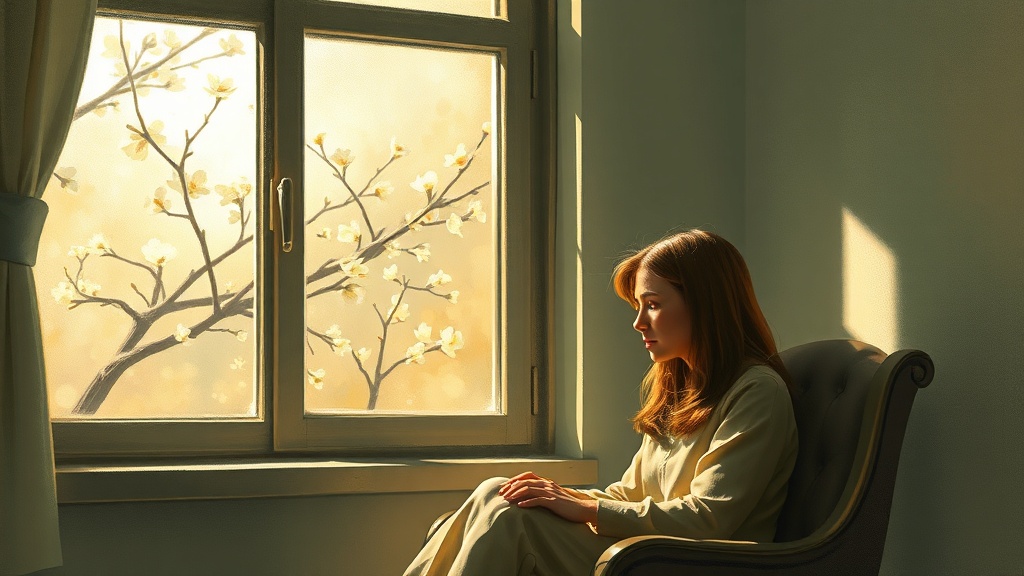
That's what I kept thinking last March, when the crocuses came up and the light lasted past 6 PM and everyone on my timeline was posting their "spring reset" content—smoothie bowls and open windows and that particular flavor of optimism that arrives every year like clockwork.
Meanwhile, I was crying in my car in the Trader Joe's parking lot for no reason I could articulate.
Here's the thing that nobody in the wellness space wants to say out loud: spring can make you feel worse. Not despite the longer days and warmer weather, but in some ways because of them. And the research on this is not new—it's just deeply inconvenient for the seasonal-reset narrative.
If you or someone you know is struggling with suicidal thoughts, contact the 988 Suicide & Crisis Lifeline by calling or texting 988. You can also chat at 988lifeline.org. You are not alone.
The Data That Makes Everyone Uncomfortable
Suicide rates don't peak in winter. They peak in late spring and early summer. This finding has been replicated so consistently across decades of epidemiological research that it's essentially settled science. A comprehensive review published in the International Journal of Environmental Research and Public Health analyzed studies spanning multiple countries and confirmed the pattern: there's a statistically significant spring peak in suicide rates, typically between April and June. Let that sit for a second. The season we associate with renewal, hope, and fresh starts is the season when the most people end their lives. Why? There are several competing theories, and the honest answer is we don't fully know. But the leading candidates are worth understanding.The Serotonin Paradox
One theory involves serotonin—the neurotransmitter everyone's heard of because SSRIs target it. Increased sunlight exposure in spring drives serotonin production up. For most people, this feels good. But for people who are severely depressed, the boost in serotonin may increase energy and motivation before it lifts mood. Think about what that means: you're still in emotional agony, but now you have the activation energy to act on it. Some researchers have connected sunlight-driven serotonin changes to more impulsive behavior—including self-directed violence. This is one reason why clinicians watch patients more carefully in the first weeks of antidepressant treatment. The mechanism may be similar to what happens naturally in spring.The Contrast Effect (This One Gets Me)
Here's the theory I find most psychologically interesting, and the one that applies to way more of us than just those in clinical crisis. When it's winter, the external world matches your internal state. It's dark, it's cold, everyone's kind of low-energy. There's a strange comfort in that alignment. Your depression or malaise feels contextually appropriate. Then spring arrives, and suddenly everything around you is blooming and bright and theoretically wonderful. Your neighbors are gardening. Your coworkers are talking about hiking plans. Social media becomes a highlight reel of rebirth. But you still feel the same. That gap between how you feel and how you think you should feel based on external cues? That's a contrast effect, and it can be devastating. Research on emotional experience consistently shows that context shapes how we interpret our own feelings. When the environment signals "you should be happy now" and you're not, you don't just feel bad—you feel wrong for feeling bad. I call this the expectation hangover of seasonal change. And I think it's way more common than anyone admits.The Social Acceleration Problem
There's a practical layer too. Spring brings a surge of social activity—invitations, outdoor events, "we should get together!" texts that actually materialize. For people who've been in a functional cocoon all winter, this can feel less like liberation and more like a sudden demand on depleted resources. A 2023 study in Translational Psychiatry found an interesting timing pattern: explicit suicidal thoughts peaked in winter months (December-January), but the peak in actual attempts and completions came later, in spring. The researchers hypothesized a latency effect—the ideation forms in the dark, but the behavioral activation comes with the light. This isn't just relevant for people in crisis. On a less extreme level, the same pattern plays out for all of us: the things we couldn't face in winter become harder to avoid in spring. The relationship you've been meaning to end. The career pivot you've been talking about for months. The health issue you've been ignoring. Spring strips away the excuse of "I'll deal with it when it warms up." And then it warms up.What Actually Helps (Not What Instagram Says)
I'm not going to give you a "10 steps to a joyful spring" list because that would make me a hypocrite. But here's what I've learned from both the research and my own experience of struggling in seasons that are supposed to feel easy: Name the contrast. Literally say it out loud or write it down: "It's spring and I feel terrible and that's a real thing that happens to real people." The research on affect labeling—putting feelings into words—shows it reduces amygdala reactivity. It's not magic, but it takes the edge off the shame spiral. Resist the seasonal reset narrative. You don't have to reinvent yourself because the clocks changed. The pressure to "spring clean" your entire life is a cultural invention, not a biological requirement. Your nervous system doesn't care what the calendar says. Watch the comparison trap. If everyone else seems energized and you're not, remember that you're comparing your internal experience to their external presentation. This is always true, but it's amplified in spring when the performance of renewal becomes a social norm. Protect your transition pace. If winter was a slow season for you, you don't have to go from zero to sixty because the sun came out. Gradual increases in social activity and outdoor time are more sustainable and less likely to trigger the overwhelm-withdrawal cycle. Talk to someone if the gap is widening. If you notice that the distance between how you feel and how you think you should feel is growing—especially if that gap comes with hopelessness—that's worth bringing to a therapist or counselor. The spring paradox is real, and clinicians who understand it can help you navigate it without the toxic positivity layer.The Uncomfortable Bottom Line
I write about this every year in some form because I think the wellness world does real harm when it treats spring as an unambiguous good. The "new season, new you" messaging isn't just annoying—for some people, it's genuinely dangerous. It creates an environment where struggling during a "happy" time feels like a personal failure rather than a predictable neurobiological and psychological response. Spring is beautiful. It's also hard. Both things can be true, and your brain might need help holding that paradox. If you're having a rough March, you're not broken. You're having a well-documented human experience that researchers have been studying for decades. And the fact that nobody posts about it doesn't make it less real.If you or someone you know is struggling with suicidal thoughts, contact the 988 Suicide & Crisis Lifeline by calling or texting 988. You can also chat at 988lifeline.org. You are not alone.