The People You Almost Know: Why Acquaintances Matter More Than You Think for Loneliness

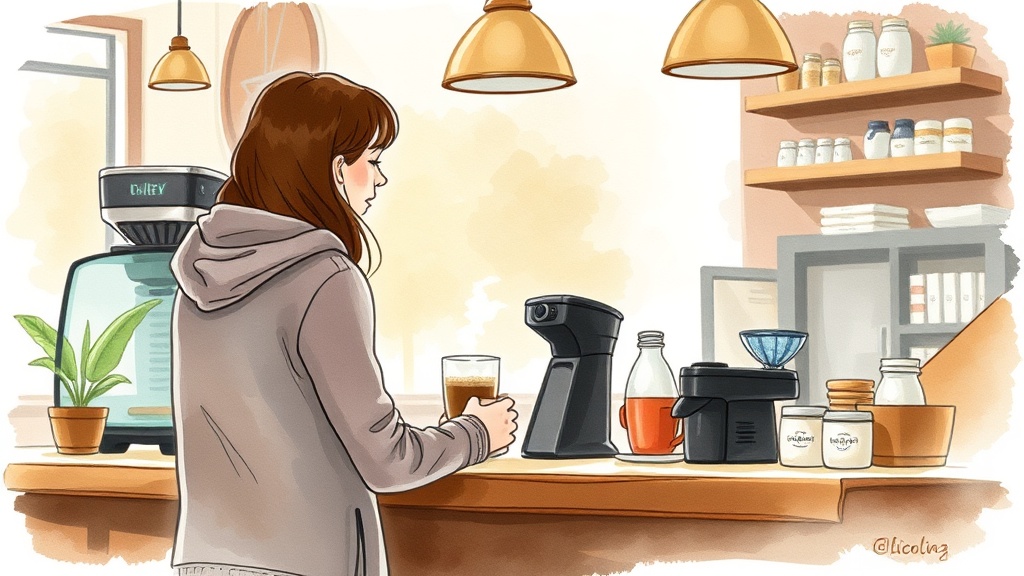
Last week, the person who made my day wasn't my partner, my therapist, or my best friend. It was the barista at the coffee shop two blocks from my apartment who remembered I'd switched from oat milk to whole milk and said, "Back to the real stuff, huh?"
That interaction lasted maybe eight seconds. I thought about it for hours.
We spend enormous energy optimizing our close relationships—date nights, couples therapy, friend reunions, vulnerability exercises. And those matter. But there's a whole category of social connection that the wellness world almost completely ignores, and the research on it is honestly kind of staggering.
I'm talking about your weak ties. Your acquaintances. The neighbor you wave to, the regular at the gym who spots you without being asked, the coworker from a different department who you only see at the coffee machine. These people aren't in your inner circle, and that's precisely why they're so powerful.
The Science of Almost-Strangers
In 2014, psychologists Gillian Sandstrom and Elizabeth Dunn at the University of British Columbia ran a study that reframed how I think about connection. They tracked students' daily social interactions and found that on days when participants talked to more weak ties than usual, they reported significantly greater happiness and a stronger sense of belonging.
Not close friends. Not family. Acquaintances.
This wasn't a one-off finding. Sandstrom and Dunn also ran an experiment where they sent people to Starbucks with one instruction: either have a genuine social interaction with the barista, or be efficient—get your coffee and go. The people who chatted with the barista reported better mood and a greater sense of belonging than the efficiency group.
Eight seconds. A comment about milk. And your entire affect shifts.
Why Weak Ties Hit Different
Here's what I think is happening, based on what the literature suggests and my own (admittedly biased) experience:
Close relationships carry weight. When your partner asks "how are you," there's history in the question. There's expectation. You might perform wellness or perform struggle depending on the dynamic. Your best friend already knows your narrative arc for the month.
Weak ties are low-stakes mirrors. The barista who remembers your milk preference is reflecting back something simple but real: you exist in this space, and someone noticed. There's no agenda. No emotional debt. Just a moment of recognition.
Robin Dunbar—the anthropologist behind the famous "Dunbar's number" of 150 social connections—has argued that we maintain different layers of relationships, from the innermost five people we'd call in a crisis to an outer layer of about 150 people we recognize and interact with loosely. Most loneliness interventions focus exclusively on that inner ring. But a 2022 study in the journal Innovation in Aging found that diversity of social ties—having both strong and weak connections—was a stronger predictor of reduced loneliness in older adults than the quality of close relationships alone.
Read that again. It wasn't about having deeper friendships. It was about having more kinds of connection.
The Loneliness Epidemic Is Partly a Weak-Tie Epidemic
I don't think it's a coincidence that the loneliness crisis accelerated alongside the collapse of what sociologists call "third places"—spaces that aren't home and aren't work where people regularly encounter loose acquaintances. The neighborhood bar. The church lobby. The community pool. The bookstore with the guy who always recommends the wrong novel but it doesn't matter because it's Tuesday and he's there.
We've replaced third places with delivery apps, remote work, and algorithmic entertainment. Each of those is individually rational. Together, they've quietly severed thousands of micro-connections that used to happen automatically.
And when Surgeon General Vivek Murthy declared loneliness a public health epidemic in 2023, comparing its health impact to smoking 15 cigarettes a day, the solutions he emphasized were mostly about strengthening close ties. Which, yes. But the weak-tie infrastructure—the casual, ambient, low-effort encounters that used to be woven into daily life—that's what we actually lost at scale.
What I've Been Doing About It (My N=1 Experiment)
Here's my confession: I work from home. I live with my thoughts and my mechanical keyboard and my open-access journals. After I left academia, I became very good at being alone. Productively alone. Efficiently alone.
But last month I ran my own informal experiment. For two weeks, I deliberately sought out one weak-tie interaction per day. Nothing dramatic:
- Complimenting the dog walker's dog (specificity matters—"her ears are incredible" hits different than "cute dog")
- Asking the librarian what they've been reading
- Actually talking to my neighbor instead of the polite head-nod-while-checking-my-phone move
- Staying at the farmers market 10 minutes longer than my errands required
I didn't track this with a spreadsheet. (Okay, I did. But only because that's how my brain works.) What I noticed: my baseline mood shifted by about day five. Not euphoria. Something subtler. I felt more placed. More like I belonged to a geography, not just a WiFi network.
The research supports this. A 2024 study published in the Journal of Positive Psychology tested a micro-intervention for improving weak-tie interactions and found that even small shifts in how people approached acquaintance encounters—being more present, asking one genuine question—improved both the quality of the interaction and subsequent wellbeing.
The Boring Prescription
Here's the part where I'm supposed to give you a framework. I'm not going to, because I think frameworks are why wellness content fails. Instead, here's what I actually think:
Stop optimizing your inner circle and start noticing your outer one.
You probably don't need another technique for having hard conversations with your partner. You might need to actually go to the hardware store instead of ordering online, and when the person in the plumbing aisle says "these compression fittings are garbage," just... talk to them for two minutes.
That's it. That's the intervention.
The science of wellbeing has spent decades focused on gratitude journals and meditation apps and therapeutic models. Those tools work. I use them. But the thing that shifted my mood in two weeks was looking up from my phone and saying, "Her ears are incredible."
Connection doesn't require depth. Sometimes it just requires proximity, presence, and the willingness to be slightly inefficient.
Maya's micro-dose: This week, pick one errand you usually do online and do it in person instead. Not for the experience—for the encounters. Notice who you meet in the margins.