The Inspiration Hangover: What Your Brain Needs After IWD

I never expected to find this in my research: the people most susceptible to the inspiration hangover are the ones who believe in growth the most.
I know because I was one of them.
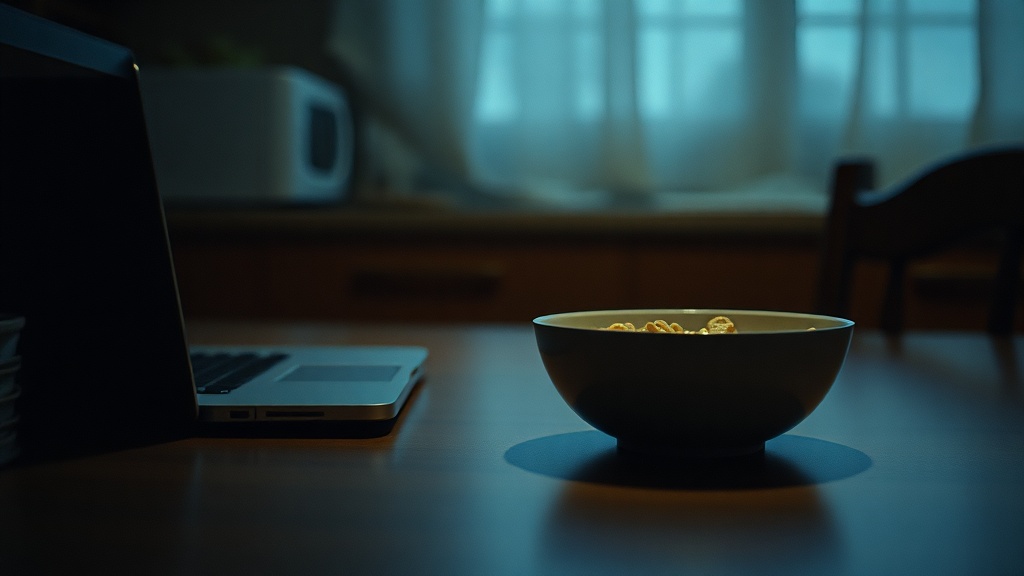
At 28, I was a social psychology researcher studying human flourishing—literally my job was to understand what makes people happier—and I would spiral every time I attended a conference. Four days of hearing about extraordinary work, extraordinary people, extraordinary lives. I'd come home buzzing. And then, about 72 hours later, I'd be sitting at my kitchen table at 11 PM eating cereal for dinner, unable to open my laptop, convinced I had accomplished absolutely nothing of consequence.
This is called the inspiration hangover. And it's about to hit its annual peak—International Women's Day is this weekend, and the content flood is already building. I'm writing this now because the time to understand the mechanism is before you're in it.
Why Inspiration Feels Like a High (And Then Doesn't)
Your brain responds to novel, socially-validated information with a dopamine release. This isn't metaphorical—novelty activates the mesolimbic pathway, and social proof amplifies it. When you spend 48 hours consuming content about women who built companies from scratch, ran ultramarathons, published books, raised children, changed policy, and still had time to deliver a TED Talk with perfect posture, your dopamine system lights up like a pinball machine.
This is the "inspiration spike."
The research on social media use and psychological well-being is fairly consistent here. Steers et al. (2014) found that passive social media consumption predicted depressive symptoms specifically through upward social comparison—comparing yourself to people who appear to be doing better. Vogel et al. (2014) confirmed it: the type of consumption matters less than the direction of comparison. Kross et al. (2013), studying Facebook use, found the mechanism wasn't connection or communication—it was comparison.
(The irony of me, a social psychologist who had read all of these studies, still spiraling after conference week is not lost on me. I read the literature. I built my own datasets. And I still ended up eating cereal at 11 PM.)
The hangover isn't a character flaw. It's not that you're lazy or ungrateful or unambitious. It's that your brain adapted to an artificially elevated input environment, and now ordinary life looks dim by contrast.
The Baseline Shift Problem
The mechanism that matters: contrast effects.
When you spend days consuming peak-curated aspirational content, your brain recalibrates what "normal" looks like. The baseline shifts upward. After IWD weekend, you've essentially been running your nervous system on premium rocket fuel. On Monday, when you're answering emails about expense reports and deciding what to make for dinner, the signal-to-noise ratio of your actual life feels catastrophically low.
This is why motivation feels impossible in the days after an aspiration season. It's not that you don't want to grow. It's that your brain may be experiencing something like a withdrawal effect from the dopamine spike of all that inspiration content—a theoretical frame that fits the subjective experience pretty well, even if the underlying neuroscience is more complex than a simple "hangover" metaphor suggests.
One useful way to think about it: dopamine doesn't just reward you, it calibrates your prediction of reward. Flood your system with high-stimulation inputs, and your baseline expectation may rise. Then when normal life resumes, the gap between expectation and reality creates that restless, vaguely dissatisfied feeling you can't quite name. You're not depressed. You're not lazy. You're experiencing a calibration problem.
And trying to fix that calibration problem with more inspiration tends to make it worse.
Why the Reset Isn't "More Inspiration"
This is counterintuitive, because when we feel flat and unmotivated, the instinct is to seek another hit. More podcasts. Another keynote video. Maybe this one will finally light the spark that makes everything click.
It won't.
(I say this as someone who, at my lowest point during burnout, had seventeen browser tabs of "inspiring women" articles open and had done nothing but read them for three days.)
The reset isn't about finding the right inspiration. It's about input restriction. It's boring. It's uncomfortable. And based on both the research and my own experience, it's what actually tends to move the needle.
Research on attention restoration and cognitive recovery points consistently in this direction: the brain doesn't recover from information overload through more information. It recovers through boredom. Through low-input environments. Through the very things we've been culturally trained to treat as failure states.
The instinct to immediately fill the inspiration hangover with more content is the cognitive equivalent of drinking through a hangover. Temporary relief. Longer recovery.
The Protocol (Unglamorous Edition)
I want to be clear: this isn't a 21-day challenge. There's no worksheet. This is a 48-to-72-hour reset, and it looks deeply unimpressive from the outside.
The 48-hour feed pause. No social media. No inspirational podcasts. No TED Talks. No newsletters about powerful women (or powerful anyone). This is input restriction, not information restriction—you can read a novel, watch something dumb, call your mom. You're just cutting the upward comparison loop. If 48 hours feels impossible, start with 24. The point is to stop flooding the system with curated highlights.
Deliberate boredom. Sit with nothing for at least 20 minutes a day. Not meditation (though that's fine too). Just... nothing. Boredom is uncomfortable, and that discomfort is information. Your brain has been anesthetized by content. Boredom is what resets the threshold back toward baseline. It's harder than it sounds. You'll want to reach for your phone inside of four minutes. Don't.
Three small, real wins. Not aspirational goals. Actual things in your actual life. Fold the laundry. Respond to the email you've been avoiding. Water the plant that's been looking accusatory. The reason these count is not motivational—it's about rebuilding your brain's evidence base for what competence in your actual life looks like. After days of consuming evidence that other people are doing extraordinary things, you need to recalibrate what you are actually doing. These three things are the data.
One boring conversation. Not a deep meaningful check-in. Not a processing session about how you've been feeling. A boring conversation with someone you like. Groceries, weekend plans, an observation about the weather. Normal human contact without performance. This sounds trivial and it is the most underrated recovery tool I know.
Low-input days. For the rest of the week, if you can: quieter inputs. Fewer podcasts. Less scrolling. Not because input is bad, but because you've exceeded your system's processing capacity and you need to let it drain.
What This Is Actually About
What the research keeps circling back to: the inspiration hangover isn't about being insufficiently motivated. It's about having consumed content that was optimized to make you feel inadequate so that you'd engage more.
IWD content isn't malicious. Most of it is genuinely wonderful—real women sharing real stories. But the algorithmic amplification of the most aspirational, most striking, most shareable stories creates a sample that's wildly unrepresentative of how growth and resilience and recovery actually happen. In the lab, we called this availability bias. You see the highlights. You don't see the Tuesday expense report and the cereal at 11 PM.
The women in those videos have those days too. The ones who gave the keynotes. The ones who built the companies. They also hit the baseline-shift problem when they consume too much aspirational content. I've talked to enough of them to know.
The reset isn't about lowering your expectations for yourself. It's about accurate calibration. About letting your brain return to a baseline where ordinary progress is visible again—where folding the laundry registers as a thing you did, not a gap between you and someone else's extraordinary life.
Your brain doesn't need more inspiration right now. It needs enough quiet to remember what you're actually building.
That's not small. That's the whole project.
If you want to read the actual research: Steers, Wickham & Acitelli (2014) in the Journal of Social and Clinical Psychology; Vogel, Rose, Roberts & Eckles (2014) in Psychology of Popular Media Culture; Kross et al. (2013) in PLOS ONE. They're worth the read—or at least the abstract—once your brain has had a few days off from its content diet.