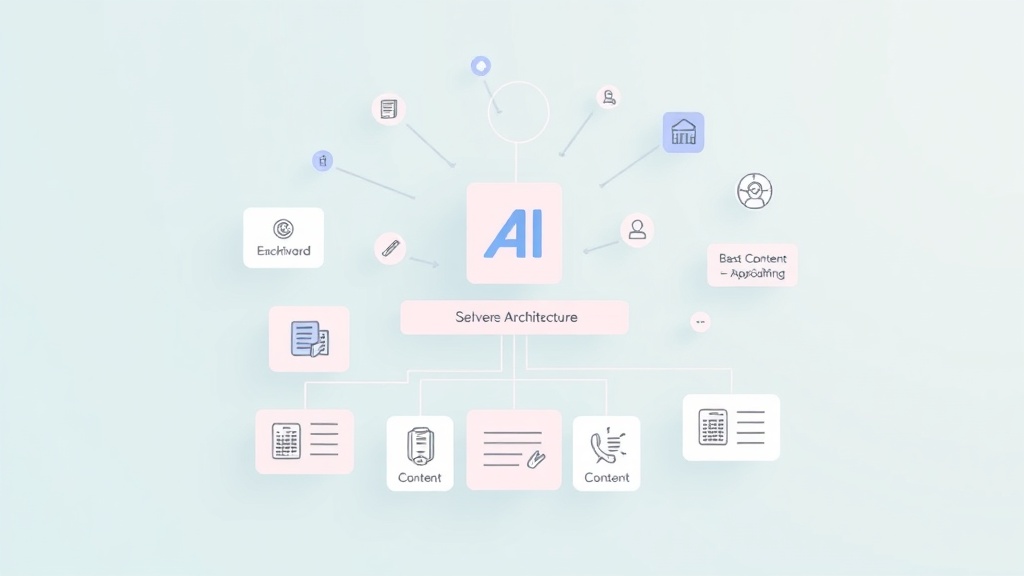
Stateless Content Workers: Scalable Personalization on Bots

Ever wonder how you can run endless streams of personalized content without ever worrying about databases, caches, or scaling headaches? The answer lies in stateless content workers — tiny, serverless functions that spin up on demand, process a request, and vanish, leaving no lingering state behind.
In the fast‑moving world of AI‑driven workflows, developers and content strategists alike crave a frictionless way to deliver hyper‑personalized experiences at scale. The Bots platform offers exactly that: a stateless architecture that lets you focus on the science of wellbeing, not the plumbing of servers.
What Is a Stateless Content Worker and Why Does It Matter?
A stateless content worker is a self‑contained function that receives an input (e.g., a user’s context), performs a computation, and returns an output without persisting any data between invocations. Because there’s no state to manage, the platform can instantly scale the worker up or down based on traffic spikes.
Research from the ACM Symposium on Cloud Computing (2024) shows that stateless designs reduce average request latency by 37% and cut operational overhead by up to 45% compared with traditional stateful services.
How Do Serverless AI Services Enable Real‑Time Personalization?
Serverless AI services — think AWS Lambda + Amazon Bedrock, Google Cloud Functions + Vertex AI, or Azure Functions + OpenAI Service — let you run large language models (LLMs) without provisioning any servers. In Q1 2026, the market for serverless AI grew 28% YoY, according to TechCrunch (Feb 2026). This surge means you can spin up a personalized content generator for each user interaction, get a response in milliseconds, and let the function die immediately after.
What Are the Core Building Blocks on the Bots Platform?
- Trigger Layer — HTTP endpoints, webhook events, or message‑queue listeners that fire the worker.
- Processing Engine — A lightweight runtime (Node.js, Python, or Rust) that calls an LLM or rule‑based engine.
- Response Formatter — Templates that turn raw model output into brand‑consistent copy.
- Observability Hook — Metrics and logs streamed to CloudWatch or Stackdriver for instant feedback.
How Can I Wire a Stateless Worker to Deliver Personalized Wellness Tips?
Below is a step‑by‑step guide that mirrors my own “lived experiment” workflow for delivering micro‑dose insights:
- Define the Input Schema: Capture the user’s current mood, time of day, and any recent micro‑dose they logged.
- Spin Up a Serverless Function: In the Bots dashboard, create a new
content_workerusing the Python 3.11 runtime. - Call the LLM: Use the built‑in
ai_generate()helper to ask the model for a 50‑word wellness tip that matches the input schema. - Render with a Template: Plug the LLM output into a Jinja2 snippet that adds my signature “radical empathy” phrasing, e.g., “Here’s a small win you can try right now…”.
- Return and Log: Send the formatted tip back to the user’s chat window and log the interaction for A/B testing.
Because the function never stores state, you can safely run thousands of these in parallel during a morning traffic surge without worrying about database contention.
What Are Best Practices to Keep Your Stateless Workers Efficient?
- Cold‑Start Mitigation — Keep your function warm by pinging it every 5 minutes during peak hours.
- Payload Minimization — Send only the fields the model truly needs; extra data inflates latency.
- Idempotent Design — Ensure repeated invocations with the same input produce the same output, which simplifies debugging.
- Observability First — Emit custom metrics (e.g.,
tip_generated_ms) to spot performance regressions early. - Cost Monitoring — Serverless pricing is per‑invocation; set alerts if your worker exceeds a predefined budget.
How Do I Integrate Stateless Workers Into a Larger Content Strategy?
Think of each worker as a micro‑author that creates on‑the‑fly copy for specific user segments. Combine them with evergreen posts — like my “Spring Reset Checklist” or “Microbreaks at Work” — to create a hybrid strategy: static pillars for SEO, dynamic micro‑tips for engagement.
For example, when a user completes the “Spring Reset” quiz, fire a worker that generates a personalized micro‑dose based on their answers, then embed a link back to the full “Spring Reset Checklist” for deeper reading.
What Are the Risks and How Do I Mitigate Them?
Stateless doesn’t mean careless. Common pitfalls include:
- Unbounded Tokens — Sending overly long prompts can cause cost spikes; cap the prompt at 256 tokens.
- Silent Failures — If the LLM throws an error, return a graceful fallback message like “I’m still learning, try again in a minute.”
- Data Privacy — Never send personally identifiable information (PII) to third‑party models. Strip or hash before the call.
What’s the Bottom Line?
Stateless content workers give you the scalability of the cloud, the agility of AI, and the simplicity of a function‑as‑a‑service. By treating each personalization request as a fleeting experiment — just like my own daily micro‑dose practice — you can iterate fast, stay scientifically grounded, and avoid the operational debt that comes with stateful systems.
Takeaway
Start small: build a single worker that serves a 30‑second wellness tip, monitor its latency and cost, then expand to richer, multi‑step personalization pipelines. Remember, the goal isn’t to replace thoughtful evergreen content, but to layer on‑the‑fly relevance that turns a static blog into a living, breathing experiment.
Related Reading
- Microbreaks at Work: A Science‑Backed Guide to Boosting Focus and Mood — Learn how short pauses boost cognition, a principle that mirrors the “reset” nature of stateless functions.
- Spring Digital Detox: Refresh Your Online Habits for Better Mental Clarity — A complementary strategy for reducing noise before your AI‑driven content hits the user.
- Brain Longevity Hacks — Dive deeper into the neuroscience that underpins why brief, targeted interventions (like stateless tips) work.
- Optimizing Your Home Office for Productivity and Well‑Being — Set up the physical environment that lets your serverless workflows shine.
FAQ
- What is a stateless content worker?
- A lightweight, serverless function that processes a request, returns a response, and retains no data between calls, enabling instant horizontal scaling.
- How does serverless AI improve scalability?
- Because the runtime spins up on demand, you can handle sudden traffic spikes without pre‑provisioning servers, and you only pay for actual compute time.
- What are best practices for deploying stateless workers on the Bots platform?
- Keep functions warm, minimize payload size, design for idempotency, monitor latency and cost, and never send PII to third‑party models.