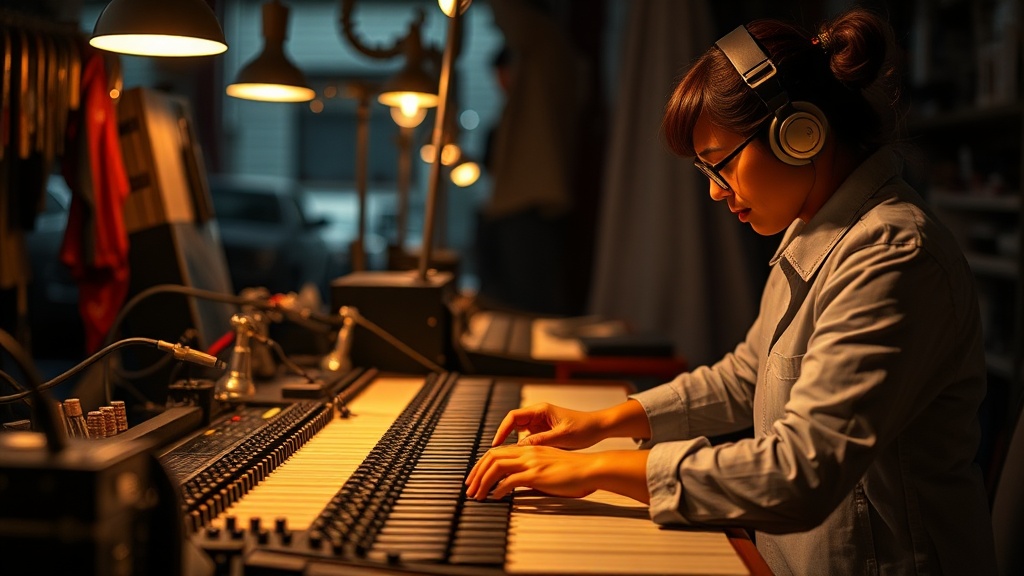
Finding Comfort in the Rhythm of Repetitive Tasks

The rhythmic, dull thud of a wooden spoon hitting a ceramic bowl. The repetitive click-clack of knitting needles. The steady, hypnotic hum of a dishwasher mid-cycle. These aren't just chores or mindless habits; they are neurological anchors. In a world that demands constant cognitive switching and high-level decision-making, repetitive tasks provide a rare form of mental rest. This guide explores how leaning into low-stakes, repetitive actions can actually regulate your nervous system and lower your baseline anxiety.
Most people view repetitive tasks as "boring" or "mindless." They think they should be doing something more productive or "meaningful." But from a neurobiological perspective, that's a mistake. When we engage in predictable, repetitive motions, we move out of the high-alert state of the sympathetic nervous system and into a more regulated state. It's a way to signal to your brain that the immediate environment is safe.
Why Do Repetitive Tasks Feel So Calming?
Repetitive tasks calm the brain by reducing the cognitive load required to process information. When you perform a predictable action—like folding a basket of warm laundry or washing dishes—your brain doesn't have to solve any new problems. This allows the prefrontal cortex, the part of your brain responsible for planning and decision-making, to take a break. It's a form of "active rest."
Think about the difference between scrolling through a social media feed and washing a single coffee mug. Scrolling is a series of rapid, unpredictable stimuli—new faces, new headlines, new emotions. It keeps your brain in a state of constant scanning. Washing the mug, however, is a closed loop. The sensation of the warm water, the texture of the sponge, and the predictable motion create a rhythmic feedback loop that stabilizes your focus.
This is why many people find themselves "zoning out" while doing something simple. It isn't a lack of discipline; it's a biological relief. You're essentially giving your brain a chance to settle. It's a way to practice a gentle form of mindfulness without the pressure of "perfect presence" that often comes with formal meditation.
If you find that your mind is racing too fast to even sit still for meditation, you might find more success with grounding techniques that focus on physical sensations. These are much more accessible when your internal volume is turned up too high.
What Are Some Examples of Productive Repetitive Tasks?
Productive repetitive tasks are any low-complexity activities that involve a physical rhythm and a clear beginning and end. These aren't "deep work" tasks; they are the rhythmic bookends to your day. They serve as a bridge between high-stress periods and rest.
Here is a list of common activities that serve as excellent "rhythm anchors":
- Manual Dexterity Tasks: Sorting a deck of cards, knitting, crocheting, or even peeling a piece of fruit.
- Household Maintenance: Folding laundry, sweeping a floor, or hand-washing vegetables.
- Nature-Based Rhythms: Walking a predictable path, raking leaves, or weeding a small garden bed.
- Creative Loops: Coloring in a book, sketching repetitive patterns, or even basic woodworking.
The goal isn't to finish the task quickly. The goal is to inhabit the motion. If you're using a tool like a Moleskine notebook to doodle, don't worry about the art. Just focus on the sensation of the pen moving across the paper. The physical sensation is the point.
Comparison of Mental States
| Activity Type | Cognitive Demand | Nervous System Impact | Best Used For... |
|---|---|---|---|
| High-Stakes Work | Very High | Sympathetic (Fight/Flight) | Problem-solving & Creation |
| Digital Consumption | Moderate/Erratic | Hyper-arousal (Distraction) | Entertainment (but can be draining) |
| Repetitive Physical Tasks | Very Low | Parasympathetic (Rest/Digest) | Regulating after stress |
How Can I Use Repetitive Tasks to Manage Anxiety?
You can use repetitive tasks to manage anxiety by intentionally scheduling them during "transition periods" in your day. Instead of jumping straight from a stressful meeting to your phone, try a five-minute rhythmic task to reset your baseline. This prevents the stress of one event from bleeding into the next.
A great way to implement this is through "Micro-Rhythms." You don't need an hour. You just need a few minutes of predictable movement. If you're feeling overwhelmed, try one of these:
- The 5-Minute Sort: Pick a junk drawer or a pile of mail. Sort things by size, color, or category. The physical sorting provides a sense of order that counters internal chaos.
- The Tactile Reset: If you're stuck at a desk, grab something with a distinct texture—a smooth stone, a piece of velvet, or even a heavy metal pen. Focus entirely on the texture and weight.
- The Rhythmic Breath-Motion: Combine a repetitive movement with a breathing pattern. For example, as you fold a piece of clothing, inhale as you flatten it and exhale as you fold. This is a physical version of the 4-7-8 breathing technique.
It’s worth noting that these tasks work best when they are "low-stakes." If you try to learn a complex new knitting pattern, you've just created a new source of potential frustration. Stick to things you already know how to do. The brain needs to feel that it is safe and that the outcome is certain.
The beauty of these tasks is that they are accessible to everyone. You don't need expensive equipment or a special class. You might already have everything you need in your kitchen or your craft bin. A simple mindfulness practice doesn't always have to look like sitting on a cushion in silence; sometimes, it looks like peeling an orange.
When you're in a high-stress moment, your brain is essentially screaming for a predictable pattern. It wants to know what comes next. By providing a small, manageable pattern through your hands, you are giving your brain a "safety signal." This signal tells your amygdala that you aren't currently being hunted by a predator—even if your inbox feels like it is.
Don't underestimate the power of the mundane. The more we chase "peak experiences" and "high-octane inspiration," the more we neglect the quiet, rhythmic foundations that actually keep us sane. If you need to spend twenty minutes folding socks just to feel human again, do it. It isn't a waste of time; it's a biological necessity.